7 Tips for Choosing Nonwoven Geotextile Fabric

A geotextile roll can look simple on a jobsite, but the wrong specification may lead to clogged drainage, soil movement, or early damage. Choosing nonwoven geotextile fabric starts with the work it must perform. Is it separating soil from aggregate, filtering water, protecting a liner, or helping drainage? Those roles call for different properties, so appearance alone is a poor guide.

The ground matters, too. Soft clay beside a drainage trench presents different demands than compacted soil beneath a walkway. Check the project plans and product data for key details, including permeability, strength, puncture resistance, and durability during installation. Consider how the fabric will be stored and exposed before it is covered. Small details count. A sharp stone or an overly stretched seam can undermine an otherwise suitable product. The seven tips ahead offer a practical way to compare options, ask suppliers clearer questions, and match fabric characteristics to site conditions. They are not a substitute for engineering specifications; that distinction is easy to overlook. Even a careful choice may need adjustment when actual soil conditions differ from the original assessment.
7 Tips for Choosing Nonwoven Geotextile Fabric

Identify Site Conditions and Project Requirements

Before selecting nonwoven geotextile, inspect the soil, water, and construction traffic at the actual site. A silty trench beside a steady seep needs different filtration performance from a dry access road over coarse gravel. FHWA’s Geosynthetic Design and Construction Guidelines (NHI-07-092) identifies soil gradation, hydraulic conditions, and installation survivability as key design inputs. Small details matter. Record soil particle sizes, groundwater level, expected flow direction, and the stone’s angularity.

Tip: Match fabric openings and water-flow capacity to the soil and drainage demand. NOAA Atlas 14 provides location-specific precipitation depths by storm duration and recurrence interval; use the relevant local values when estimating runoff exposure. Do not treat a regional rainfall average as a site design. Ask for test results such as apparent opening size, permittivity, and grab tensile strength, and compare them with the project specification and applicable AASHTO M288 class.

Walk the proposed alignment after rain, if possible. Note ponding, soft shoulders, sharp fill, and places where equipment may turn over the fabric. Those observations can reveal risks that drawings miss. I would still verify the soil with field or laboratory testing; a quick visual check is useful, but not enough. A fabric that drains well in a sample may clog or suffer damage under site-specific conditions.
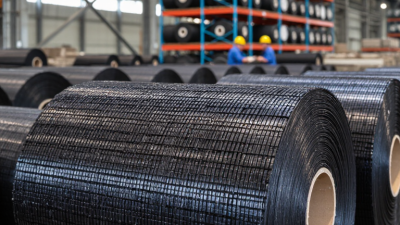
Match Fabric Strength, Weight, and Puncture Resistance

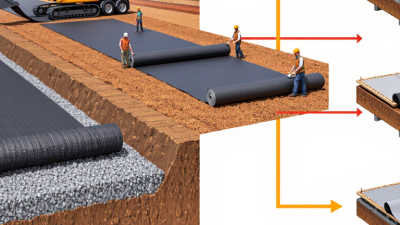
Choosing nonwoven geotextile by weight alone can lead to a poor match. Start with the job it must perform: separation, filtration, drainage, or protection. Then compare the fabric’s tensile strength in both machine and cross-machine directions. Those values help show how well it may resist pulling during placement and use. Weight offers a useful comparison, but it does not tell the whole story. Two fabrics with similar weights can perform differently because their fiber structure and manufacturing differ.

Puncture resistance matters where angular gravel, roots, or uneven subgrade could press into the fabric. Check the test method and reported values, since results from different methods may not be directly comparable. Consider the soil and aggregate on site, too. A handful of sharp crushed stone behaves differently from rounded pea gravel. Small details matter. For a practical check, spread a sample over the prepared ground and inspect it after placing representative aggregate. Watch for tears, stretching, or folds that could expose soil. This is not a substitute for project specifications or test data, but it can reveal installation issues early. There is no perfect fabric for every site, and a heavier option is not automatically safer. Match the documented strength and puncture resistance to the actual loads, soil conditions, and installation method.

7 Tips for Choosing Nonwoven Geotextile Fabric

Match fabric strength, weight, and puncture resistance to the demands of your project.

How to read this chart: Higher mass per unit area often corresponds to higher tensile and puncture resistance, but performance varies by product and manufacturing method. Values shown are representative examples, not universal specifications. Check project requirements and product test data; tensile strength and CBR puncture resistance are commonly measured using ASTM D4632 and ASTM D6241, respectively.

Evaluate Permeability, Filtration, and Drainage

When choosing nonwoven geotextile fabric, evaluate how water moves through it and along its plane. Permeability alone does not guarantee reliable drainage. AASHTO M 288-17 specifies a minimum permittivity of 0.5 s⁻¹ for geotextiles used in subsurface drainage. Permittivity measures flow through the fabric under a hydraulic head, and ASTM D4491 provides a test method. Treat the value as a specification benchmark, not a substitute for checking site soil and design requirements.

Filtration depends on retaining soil particles while allowing water to pass. Review the soil’s particle-size distribution alongside the fabric’s apparent opening size. FHWA’s Geosynthetic Design and Construction Guidelines (NHI-07-092) stresses compatibility between the soil and geotextile; ASTM D5101 can help assess clogging behavior in a soil-geotextile system. Ask for test results, not just a product data sheet. Small details matter. Also check in-plane drainage capacity under expected confinement: pressure from surrounding soil can reduce flow paths. A clean laboratory result is not a field guarantee. The soil may vary, and installation wrinkles can create local water traps.

Check Material Durability and Compliance Standards

A nonwoven geotextile may look sturdy on the roll, yet its service life depends on more than thickness. Check the technical data for tensile strength, puncture resistance, and tear resistance. These properties matter when gravel is placed or equipment moves across the fabric. Small details matter. Ask whether results come from recognized test methods, such as applicable ASTM or ISO procedures, and compare them with the project specification.

Durability also depends on exposure. If fabric will remain uncovered during construction, review its resistance to ultraviolet light and confirm the stated exposure period. For drainage or separation, check permeability and opening size against the soil conditions; a strong fabric can still perform poorly if water flow or soil retention is unsuitable. Test before installation. Examine sample rolls for even texture, damaged edges, and clear lot identification. Keep product data and test reports with delivery records, so mismatches can be traced.

Compliance is project-specific, not a vague claim printed on a label. Confirm the required standard, test method, and acceptance limits with the engineer or project documents. Requirements can vary by application and region. A certificate is useful, but it does not replace current test data or careful inspection. It is easy to overfocus on one impressive strength figure. Look at the full set of properties, and note any gaps before approving the material.

7 Tips for Choosing Nonwoven Geotextile Fabric - Check Material Durability and Compliance Standards

Tip What to Check Relevant Test or Standard How to Use the Information
1. Match the fabric to its function Decide whether the main need is separation, filtration, drainage, or protection. One product may serve multiple functions, but suitability depends on the project conditions. Project drawings and specifications; AASHTO M 288 where applicable to highway applications. Identify the intended function and installation conditions before comparing product properties. Check the applicable project specification and its adopted edition.
2. Compare tensile strength and elongation Review the specified tensile test method, reported strength, and elongation. Strength values from different test methods are not automatically interchangeable. ASTM D4632/D4632M, grab breaking load and elongation of geotextiles. Compare results using the same test method and units, and confirm the required minimums in the design documents.
3. Check resistance to tearing and puncture Consider damage risks from angular aggregate, handling, placement, and construction equipment. Tear and puncture results indicate different properties. ASTM D4533/D4533M for trapezoid tearing strength; ASTM D6241 for CBR puncture strength. Use the test method named in the specification. Also follow installation requirements, since laboratory index values alone do not guarantee field performance.
4. Verify filtration and opening size Check apparent opening size (AOS) and water-flow properties against the soil gradation, flow direction, and risk of clogging or soil loss. ASTM D4751 for apparent opening size; ASTM D4491/D4491M for permittivity of geotextiles. Have the designer assess the fabric properties together with site soil and hydraulic conditions; there is no single suitable AOS or flow value for every project.
5. Assess exposure and chemical conditions Consider how long the fabric will be exposed to sunlight before covering, as well as contact with soil, water, and any project-specific chemicals. ASTM D4355/D4355M for deterioration of geotextiles by exposure to light, moisture, and heat. Review weathering test results and the project’s maximum exposure period. Confirm chemical compatibility for unusual or aggressive site conditions.
6. Review material and manufacturing details Confirm polymer type, nonwoven construction, mass per unit area, roll dimensions, and consistency of the reported test data. ASTM D5261 for mass per unit area of geotextiles; product technical data and quality-control documentation. Treat mass per unit area as one identification property, not proof of overall performance. Check that data sheets use the same units and test methods as the specification.
7. Confirm compliance and traceability Check required standards, minimum or maximum property values, test-method editions, certificates, and lot or roll identification. The project specification and applicable standard, such as AASHTO M 288 for specified highway uses. Request current test reports and documentation for the supplied material. Confirm acceptance requirements with the project engineer or relevant authority before purchase.

Note: Required property values vary by application, soil, hydraulic conditions, installation method, and governing specification. Verify the current standard editions and project-specific acceptance criteria before selection.

Confirm Installation Needs and Supplier Quality

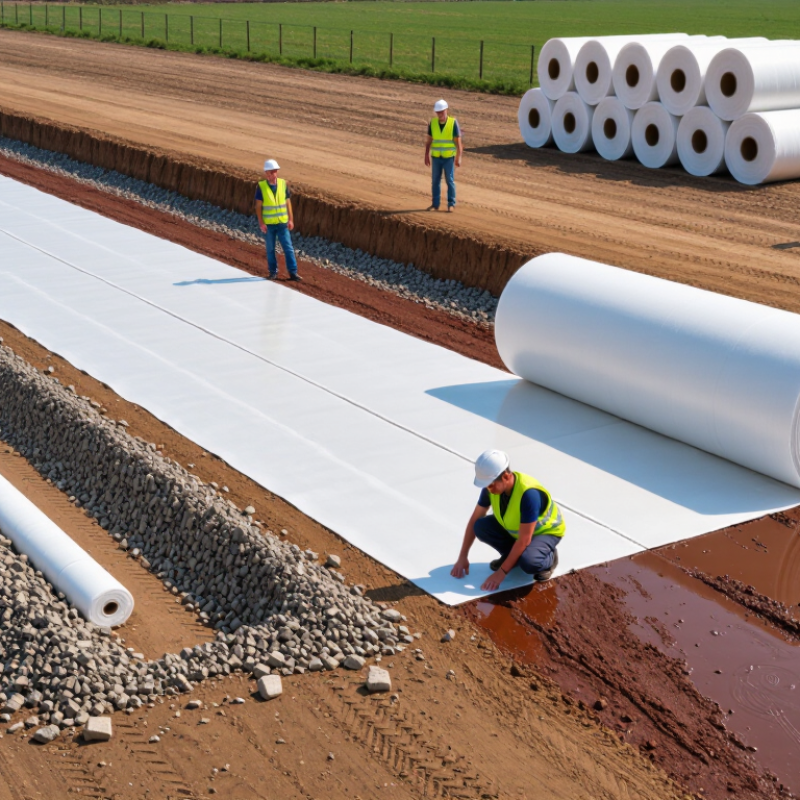
Confirm the installation conditions before selecting a nonwoven geotextile. A drainage trench may require water to pass through while soil stays in place. A temporary access road faces different demands, including repeated traffic and possible punctures. Check the project drawings for soil conditions, overlap width, anchoring, and exposure to sunlight before covering the fabric. Details matter. Ask the installer how the roll will be unwrapped and joined; a fabric that meets the basic specification can still be awkward to handle on a narrow or uneven site.

Supplier quality deserves the same attention as product selection. Request a current datasheet showing relevant properties, such as mass per unit area, tensile strength, and water flow performance. Confirm that test methods and reported values match the project specification, rather than comparing figures from different methods. Ask how production batches are identified and whether inspection records can be tied to the delivered rolls. A physical sample can reveal uneven texture, weak edges, or packaging that may not protect the material in transit. Paperwork helps, but it is not a substitute for checking the delivered goods. I would also recheck measurements with the site team; small changes in overlap can affect how much fabric is needed.