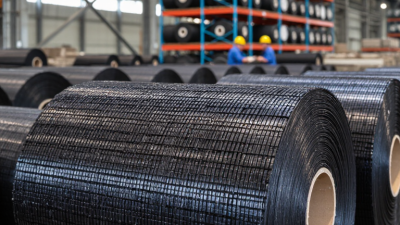
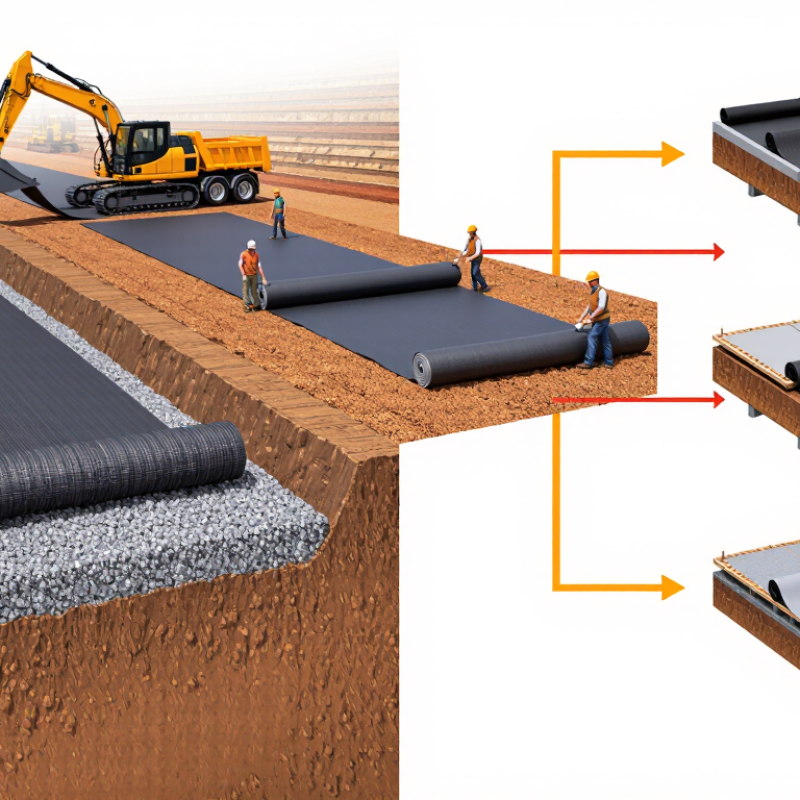
Woven geotextile fabric is commonly used to stabilize soil, separate materials, and support drainage-related construction. Its interlaced yarns create a strong sheet that can help keep aggregate from mixing with softer ground. On a muddy access road, the fabric sits beneath crushed stone, helping the surface resist rutting under repeated vehicle loads. It is also used beneath parking areas, temporary work platforms, and some embankments. The right choice depends on soil conditions, expected loads, and project design. Crews may unroll it across prepared ground, overlap seams, then cover it with aggregate. Proper grading and compaction still matter.
It is not a universal fix. Woven products generally provide high tensile strength and limited elongation, but their openings may allow less water flow than some nonwoven fabrics. That distinction matters beside a retaining structure or under a roadway where drainage is important. A tightly specified fabric can restrict water movement; one selected without adequate strength may stretch or fail during installation. Details matter. Engineers and experienced contractors typically consider product test data, subgrade conditions, aggregate size, and construction equipment before specifying a fabric. Folds, punctures, or poorly prepared ground can reduce performance. Even a good product has limits. This guide explains where woven geotextile fabric is used, what functions it can serve, and which selection questions deserve careful attention. Project requirements vary, so manufacturer guidance and qualified design advice should inform final decisions.
Woven geotextile fabric is a permeable sheet made by interlacing yarns in two directions. Lengthwise yarns, called warp, cross widthwise yarns, called weft, in a regular pattern. The yarns are commonly made from polypropylene or polyester. Some products use flat, slit-film tapes; others use finer strands. The weave gives the fabric a recognizable grid and helps it resist pulling forces.
Manufacturing starts with polymer resin, which is formed into tapes or filaments and drawn into yarns. The yarns are arranged on a loom, then woven under controlled tension. Small differences in yarn thickness or loom settings can change the finished fabric’s strength and openings. The sheet is inspected and tested for properties such as tensile strength, puncture resistance, and water flow. Numbers matter. On a road base, for example, fabric may separate soft soil from crushed aggregate while helping limit mixing under traffic. Some woven types also reinforce soil. Their openings may not suit every filtration task, though. Soil grain size and water conditions should guide selection, and a product label alone cannot answer every site question. A muddy sample or uneven subgrade can complicate even a careful design.
| Topic | Description | Typical Purpose or Consideration |
|---|---|---|
| What it is | A permeable geosynthetic fabric made by interlacing two sets of yarns or tapes at right angles: lengthwise warp yarns and crosswise weft yarns. | Provides reinforcement and separation in many soil and aggregate applications. |
| Common polymers | Polypropylene and polyester are commonly used. Material choice depends on project requirements and exposure conditions. | Check chemical compatibility, durability, and the product’s specified engineering properties. |
| How it is made | Polymer is formed into filaments or slit-film tapes, drawn to improve tensile properties, and woven on a loom. The fabric may then be finished, inspected, and cut or rolled for delivery. | Yarn type, weave, and manufacturing controls influence characteristics such as tensile strength, opening size, and water flow. |
| Roads and access routes | Placed between soft subgrade soil and a granular road base. | Can help separate soil from aggregate and reinforce the foundation, reducing mixing and helping the base retain its thickness. |
| Working platforms | Used beneath aggregate layers for temporary construction access or equipment platforms on weak ground. | Helps distribute loads and stabilize the aggregate layer when selected and installed for the site conditions. |
| Embankments and slopes | Installed within or beneath engineered soil and aggregate structures. | Can provide tensile reinforcement to help improve stability; design requires project-specific engineering. |
| Separation | Forms a permeable layer between dissimilar materials, such as fine subgrade soil and coarse aggregate. | Helps limit intermixing while allowing water to pass through, subject to the fabric’s opening size and permeability. |
| Filtration and drainage | Some woven geotextiles can allow water to flow while retaining soil particles. | Not every woven fabric is suitable as a filter. Select using soil gradation, opening size, permeability, and clogging-resistance criteria. |
| Typical performance measures | Relevant properties may include tensile strength, elongation, puncture resistance, apparent opening size, and water flow rate. | Compare test results and specifications for the intended installation rather than relying on fabric weight alone. |
| Installation considerations | Prepare the subgrade, place the fabric without damaging it, provide specified overlaps or seams, and cover it promptly with the designed aggregate or soil layer. | Follow project specifications and manufacturer-independent engineering guidance for overlap, anchoring, and construction traffic. |
Selection note: Woven geotextiles are often chosen where tensile reinforcement and separation are important. The appropriate product depends on site soil, loading, drainage needs, installation conditions, and the project design.