For global buyers, drainage fittings are no longer simple connectors hidden beneath floors. They control flow, odor protection, maintenance access, and leakage risk. A poorly matched elbow can create turbulence, while a weak gasket may fail behind a finished wall. These details matter across residential, commercial, and infrastructure projects.
The WHO and UNICEF Joint Monitoring Programme reported that 3.5 billion people lacked safely managed sanitation in 2022. Its findings show why reliable drainage systems remain a public health priority. Market studies from Grand View Research and Fortune Business Insights also identify continuing demand for plumbing and sanitary products. However, their figures differ because product categories are not defined consistently. That uncertainty deserves attention.
Dr. Duncan Mara, a respected sanitation engineer, stated, “Sanitation is more important than water supply for health.” His observation supports a practical purchasing approach. Buyers should compare uPVC, HDPE, cast iron, and stainless-steel fittings against pressure, temperature, soil movement, and installation conditions. They should also review EN, ISO, ASTM, or local compliance requirements. Not every imported fitting suits every drainage network.
This guide examines the best drainage fittings types for global buyers in 2026. It considers couplings, bends, tees, reducers, traps, cleanouts, and inspection chambers. Real projects are rarely perfect. Product availability changes. Specifications can be misunderstood. A careful comparison can still reduce rework, leakage, and long-term maintenance costs.
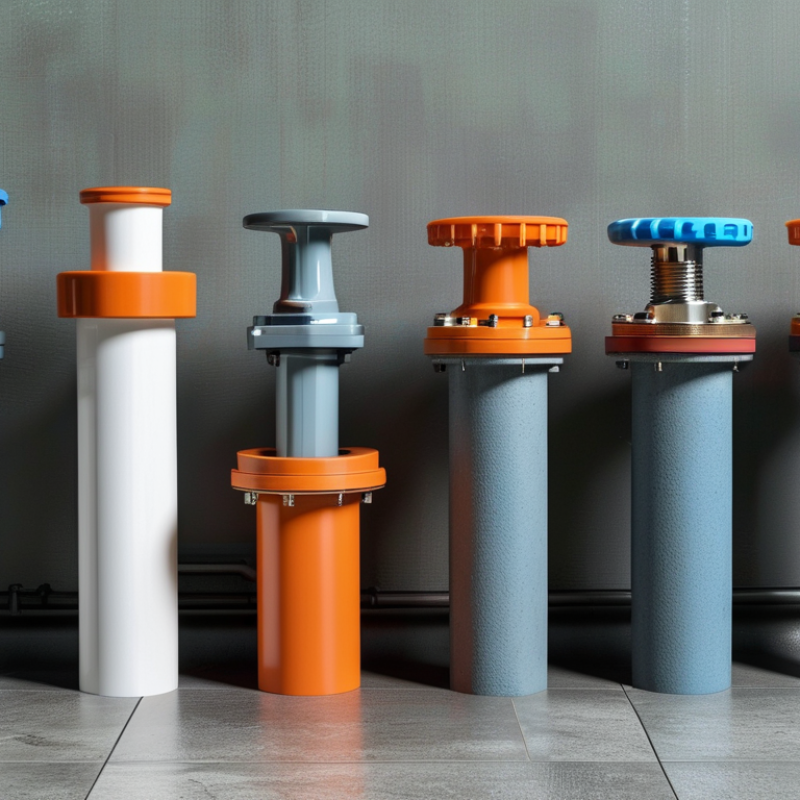
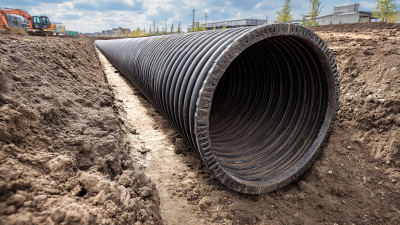
Drainage fittings connect pipes, change direction, control flow, and provide access for maintenance. Common types include elbows, tees, reducers, traps, cleanouts, and floor drains. Plastic fittings remain popular because they are lightweight, corrosion-resistant, and easy to install. PVC suits many soil and waste systems, while PP performs well where impact resistance and heat tolerance matter. Cast iron remains valuable in high-rise buildings because it reduces noise and offers strong fire performance.
Global buyers should match each fitting with the project’s drainage method and local code. EN 12056 guides gravity drainage design in many markets. ISO 3633 covers PVC-U soil and waste systems, while ASTM standards support several North American applications. These references are useful, but they are not interchangeable. Check pressure ratings, temperature limits, dimensions, gasket quality, and test reports. Field conditions can expose weaknesses that a catalog hides. A perfect material chart does not exist.
Tips: Confirm the pipe’s outside diameter before ordering. Review chemical exposure, sunlight, freezing risk, and installation space. Request certificates for dimensional testing, leak resistance, and fire performance when required. Avoid mixing fittings from different systems without verifying compatibility. A small mismatch can cause leakage, noise, or difficult maintenance. Also inspect packaging; distorted sockets and scratched sealing surfaces often create problems before installation even begins.
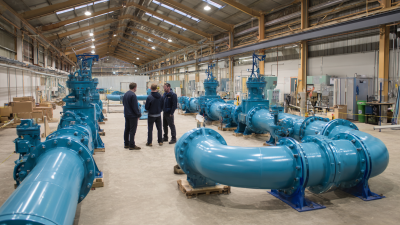
In 2026, drainage fittings demand will follow construction activity, urban density, and climate adaptation. Grand View Research’s 2024 drainage pipes analysis projects steady global growth through 2030, supported by municipal upgrades and residential development. Fittings remain essential at bends, inspection points, floor drains, and building connections.
Asia-Pacific is expected to deliver the strongest volume growth. Rapid urban construction increases demand for lightweight PVC-U and polypropylene fittings, especially push-fit and solvent-weld systems. China, India, and Southeast Asian markets also need faster installation around compact apartment projects. Fortune Business Insights reports continued expansion in the broader drainage pipe market, with infrastructure spending supporting regional demand. The figures differ.
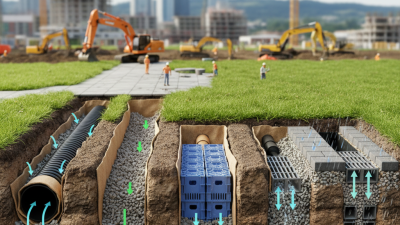
Europe shows a different pattern. Replacement work, water efficiency rules, and aging underground networks drive demand for low-leakage fittings. EN-compliant systems, gasketed joints, and inspection chambers are common procurement priorities. In North America, stormwater management supports larger fittings, channel drains, and heavy-duty connections. MarketsandMarkets identifies urban infrastructure and flood-control investment as important growth factors.
Product selection still depends on site conditions. PP handles chemical exposure well, while PVC-U offers predictable installation and broad availability. HDPE suits flexible underground applications, but joint quality requires careful training. Buyers should compare temperature limits, ring stiffness, sealing performance, and local certification. Price alone misleads. A cheaper fitting can create costly excavation later. Data from commercial reports is useful, but not perfectly comparable; regional definitions and project categories often change.
| Drainage Fitting Type | Typical Materials | Common Applications | Key Performance Requirements | Relative 2026 Demand Outlook | Regions with Strong Demand Drivers | Relevant Technical References |
|---|---|---|---|---|---|---|
| Underground Sewer and Drain Fittings | uPVC, polypropylene, vitrified clay, ductile iron, concrete | Buried gravity sewers, stormwater networks, site drainage, road drainage | External load resistance, watertight joints, chemical resistance, dimensional stability, low leakage | High | Asia-Pacific, the Middle East, Africa, and Latin America, supported by urban expansion, sanitation investment, and infrastructure renewal | EN 1401 for non-pressure underground drainage systems; local municipal and road-drainage specifications |
| Soil and Waste Discharge Fittings | uPVC, polypropylene, cast iron, stainless steel | Residential and commercial sanitary discharge, vertical stacks, branch connections | Temperature resistance, acoustic performance, fire classification where required, reliable push-fit or solvent-weld joints | High | Europe, China, Southeast Asia, the Gulf region, and North America, driven by housing construction and building renovation | EN 1329 and EN 1451 for building discharge systems; ISO 3633; ASTM requirements for DWV systems |
| Stormwater and Rainwater Fittings | uPVC, polypropylene, polyethylene, aluminum, cast iron | Roof drainage, rainwater downpipes, siphonic drainage, surface-water collection | High flow capacity, UV resistance, impact resistance, hydraulic compatibility, secure roof and facade connections | High | South and Southeast Asia, Australia, the Middle East, Europe, and coastal areas exposed to intense rainfall events | EN 12056-3 for roof drainage design; regional building codes and stormwater-management regulations |
| Floor Drain and Trap Fittings | Stainless steel, brass, cast iron, ABS, polypropylene | Bathrooms, kitchens, balconies, commercial kitchens, industrial floors | Odor seal, corrosion resistance, cleanability, anti-backflow performance, slip-resistant grate options | High | Global residential construction, hospitality, healthcare, food-service, and industrial facility projects | Local plumbing codes; EN 1253 for gullies and floor drains; project-specific hygiene requirements |
| Inspection Chambers and Access Fittings | Polypropylene, polyethylene, concrete, fiberglass-reinforced polymer | Underground inspection points, sewer maintenance access, property drainage connections | Load-bearing capacity, watertight covers, chemical resistance, access clearance, resistance to soil movement | High | Urban utility upgrades, new subdivisions, transport infrastructure, and municipal wastewater projects worldwide | EN 13598 for plastic inspection chambers and manholes; regional traffic-load classifications |
| Channel Drain and Linear Drain Fittings | Polymer concrete, polypropylene, stainless steel, cast iron, concrete | Driveways, parking areas, pedestrian zones, showers, industrial floors, loading areas | Hydraulic capacity, grate load class, chemical resistance, ease of cleaning, stable channel alignment | Medium-High | Europe, North America, Australia, the Gulf region, and high-density urban developments | EN 1433 for drainage channels; load classifications selected according to traffic and installation location |
| Grease and Oil Separation Fittings | Polyethylene, polypropylene, stainless steel, coated steel | Restaurants, food-processing facilities, workshops, parking areas, industrial sites | Separation efficiency, chemical compatibility, service access, odor control, cleaning frequency | Medium-High | Europe, North America, East Asia, and regions expanding food-service and industrial-processing capacity | EN 1825 for grease separators; EN 858 for separators of light liquids such as oil and fuel |
| Backwater Valves and Non-Return Fittings | uPVC, polypropylene, cast iron, stainless steel | Basement drainage, low-level sanitary connections, flood-risk properties, stormwater systems | Reliable shut-off, low operating resistance, inspection access, corrosion resistance, maintenance visibility | Medium-High | Europe, North America, coastal cities, and locations with increasing urban flood-management requirements | EN 13564 for backwater valves; local flood-prevention and plumbing-code requirements |
| Flexible Couplings and Repair Fittings | Elastomer seals, stainless steel, ductile iron, PVC, polypropylene | Pipe repair, diameter transitions, connection of dissimilar materials, maintenance projects | Axial restraint where required, sealing under movement, corrosion resistance, tolerance to pipe-size variation | High | North America, Europe, Japan, Australia, and mature urban networks requiring rehabilitation and leakage reduction | ASTM and EN requirements vary by coupling design, pressure class, pipe material, and installation environment |
| Drainage Fittings for Modular and Prefabricated Buildings | Polypropylene, multilayer polymer systems, uPVC, stainless steel | Prefabricated bathrooms, modular housing, hotels, hospitals, rapid-build construction | Fast installation, dimensional consistency, compact layout, low joint failure risk, compatibility with factory assembly | Medium-High | Europe, North America, Japan, Australia, and urban housing markets adopting off-site construction | Applicable building drainage, fire, acoustic, and product standards for the destination market |
For global buyers, drainage fittings should match hydraulic conditions, not only nominal size. Wye branches and long-sweep bends usually preserve flow better than sharp turns. Cleanouts also help remove sediment from low-gradient systems.
The U.S. EPA SWMM 5.2 Reference Manual (2022) uses Manning’s equation for gravity-pipe analysis. For a smooth 100 mm pipe, Manning’s n near 0.011 is commonly referenced in FHWA HDS-4.
These figures assume a clean, circular pipe. Real installations rarely behave so neatly.
Diameter selection has a stronger effect than many purchasing teams expect. In Manning-based design, full-flow capacity rises approximately with diameter to the power of 8/3. Doubling diameter can therefore increase theoretical capacity more than sixfold, at the same slope and roughness. Bigger is not automatically better. Oversized pipes may reduce self-cleansing velocity, especially during low daily flows. Fitting angles, joint offsets, and installation quality also create local losses. A 100 mm pipe may pass the calculated flow, yet fail after poor alignment or sediment buildup. Verify local plumbing rules, rainfall data, and partial-flow performance before approving a 2026 drainage system.
2026 Best Drainage Fittings Types for Global Buyers?
Drainage fittings rarely fail because of one material choice. They fail at joints, bedding, or poor site matching. The U.S. EPA’s 2022 Clean Watersheds Needs Survey recorded 630.1 billion dollars in wastewater infrastructure needs through 2041. That pressure makes reliable fittings more important for global buyers.
PVC fittings are lightweight, smooth, corrosion-resistant, and simple to cut on site. They suit residential drainage and many buried applications. However, ultraviolet exposure and very low temperatures can reduce installation flexibility. HDPE fittings handle ground movement well because of their flexibility and fusion-welded joints. They are useful near roads, coastal soil, and unstable backfill. Yet, trained installers and clean fusion surfaces are essential. One overlooked joint can become an expensive underground leak.
Cast iron offers strong impact resistance and excellent acoustic performance inside buildings. It also performs well where fire protection and rigid alignment matter. Its weight increases handling costs, especially on high-rise projects. Concrete fittings provide high stiffness for large stormwater systems, but cracking and joint movement require careful design. The American Society of Civil Engineers gave U.S. wastewater infrastructure a D+ grade in its 2021 Infrastructure Report Card, reflecting aging systems and demanding renewal conditions. In practice, buyers should compare load class, soil chemistry, temperature, gasket quality, and local repair skills. Cost alone is misleading. I have seen a cheaper fitting create slower installation and more site waste. The better choice is sometimes less obvious.
Comparing PVC, HDPE, cast iron, and concrete drainage fittings by corrosion resistance, installation weight, impact resistance, and high-temperature capability.
The index uses a 1–5 engineering comparison scale based on commonly reported material characteristics. PVC and HDPE are lightweight and highly resistant to corrosion, HDPE generally provides stronger impact resistance, cast iron offers better heat and fire performance, and concrete provides high structural mass but requires heavier handling. Actual performance depends on design, installation quality, local codes, soil conditions, and operating temperature.
2026 Best Drainage Fittings Types for Global Buyers?
A reliable buying checklist starts with certification, not catalog appearance. Ask for current test reports, factory quality records, and material traceability. Confirm that certifications match the destination market and the intended drainage application. A certificate alone proves little. Verify dimensions, pressure ratings, fire behavior, and chemical resistance independently. I have seen attractive fittings fail because their documents covered another product range.
Durability depends on more than the fitting material. Check gasket elasticity, wall thickness, UV exposure, temperature changes, and soil movement. For outdoor systems, request aging data and low-temperature impact results. For commercial projects, inspect joint tolerances and repeated-load performance. Small defects matter. A rough socket can damage a seal during installation. That mistake may remain hidden until the first heavy storm.
Compare total landed cost, including freight, duties, packaging, spare fittings, and installation labor. Request a dimensional drawing with insertion depth, outside diameter, slope guidance, and allowable tolerance. Installation data should include cutting tools, cleaning steps, sealing requirements, and inspection points. Use sample fittings before placing a large order. The sample may reveal awkward handling or poor alignment. Do not rely only on supplier claims; record site feedback, leakage tests, and installer comments. My own checklist would still leave room for revision, because local soil, weather, and workmanship can change the result.