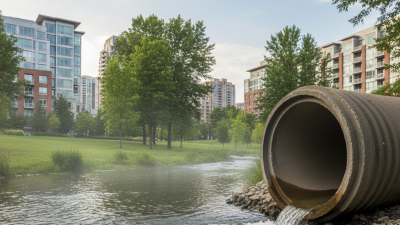
Why Choose Outdoor Drainage Pipe for Global Projects?

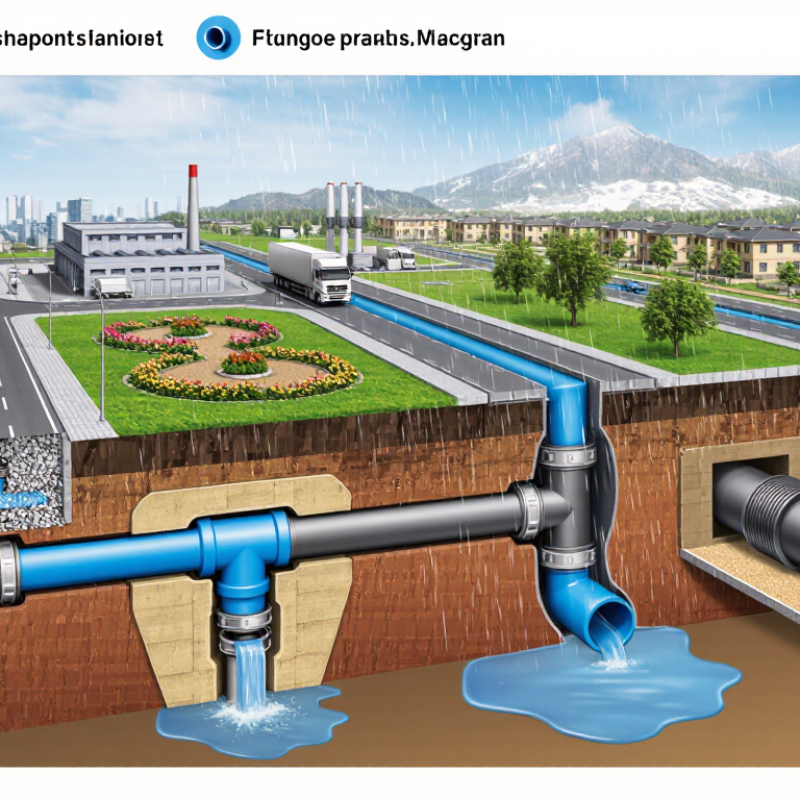
Why choose outdoor drainage pipe for global projects? The answer begins with practical site conditions, not attractive product claims. Across roads, factories, housing developments, and public landscapes, drainage systems must manage rainwater, soil pressure, temperature changes, and long-term maintenance. A well-selected outdoor drainage pipe can guide water away from foundations, reduce surface pooling, and protect paved areas from premature damage.

Field experience shows that performance depends on more than pipe material. Diameter, wall strength, joint design, slope, bedding, and access points all influence reliability. In a coastal project, salt exposure may affect fittings and supports. In colder regions, freeze-thaw movement can stress poorly installed connections. On a steep site, uncontrolled flow may erode surrounding soil. These details require careful design and local inspection.

No pipe fits every project. That matters.

Engineers and contractors should compare product specifications with regional standards, soil conditions, expected flow, and installation methods. Reputable manufacturers should provide traceable testing information, clear installation guidance, and technical support. However, documentation alone cannot replace responsible workmanship. A strong product may still fail because trenches were uneven, joints were contaminated, or maintenance access was ignored.

Choosing an outdoor drainage pipe is therefore a balance between durability, cost, availability, and verified performance. Global projects need solutions that travel well across climates, but they also need local judgment. The most reliable decision may not be the cheapest or most familiar option. It should be the one that performs consistently after the site is completed, inspected, and exposed to real weather.
Why Choose Outdoor Drainage Pipe for Global Projects?

What Is Outdoor Drainage Pipe and How Does It Work?

Outdoor drainage pipe is a buried or exposed conduit that carries rainwater, groundwater, and surface runoff away from buildings, roads, and industrial sites. It commonly uses perforated sections for soil drainage and solid sections for controlled water transport. The pipe works through gravity, pressure differences, or connected pumping systems. A slight, continuous slope helps water move without unnecessary energy use.

In global projects, engineers assess rainfall intensity, soil type, frost depth, and expected vehicle loads before selecting the pipe structure. Geotextile fabric can reduce sediment entering perforations, while cleanout points support practical maintenance. Connections must remain sealed where contaminated water could reach surrounding soil. It sounds simple. Field conditions disagree.

During installation, I have seen excellent pipe designs fail because trenches were uneven or backfilled too quickly. Bedding material should support the pipe evenly, not only beneath its centerline. Inspection cameras can reveal displaced joints before the first heavy storm. Local construction standards also matter, since accepted materials and testing methods vary between regions. A design may perform well in a dry climate but struggle after seasonal flooding. Engineers should verify hydraulic capacity, access requirements, and long-term ground movement rather than relying on a standard diameter. Even careful calculations need site observation, because maps rarely show every root, rock, or hidden utility.
Why Choose Outdoor Drainage Pipe for Global Projects?

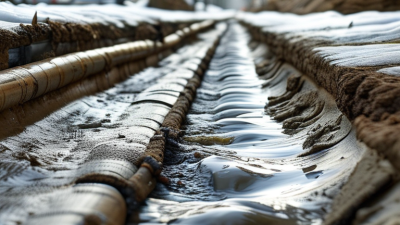
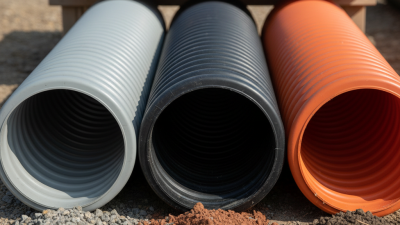
Outdoor drainage pipes help collect and convey stormwater away from roads, buildings, agricultural areas, and other infrastructure. Their hydraulic performance depends on pipe diameter, internal roughness, and installation slope.

Estimated full-flow capacity at a constant 1% slope, calculated with the Manning equation for a full circular pipe. Values are shown in litres per second and use representative roughness coefficients of 0.009 for smooth-wall plastic, 0.013 for concrete, and 0.024 for corrugated polymer pipe. Actual performance varies with site conditions, joints, slope, sediment, and hydraulic design requirements.

Key Materials and Design Features of Outdoor Drainage Pipe

Why Choose Outdoor Drainage Pipe for Global Projects?

Key Materials and Design Features of Outdoor Drainage Pipe

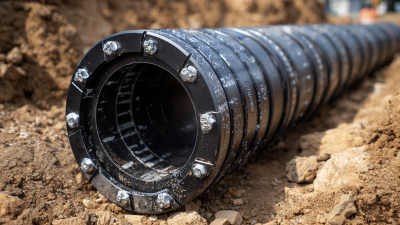
Outdoor drainage pipe must withstand buried loads, sudden rain, chemicals, sunlight, and temperature changes. Material selection begins with soil conditions and installation depth. High-density polyethylene offers flexibility and strong corrosion resistance. PVC provides a smooth internal surface and stable hydraulic performance. Reinforced concrete handles heavy external loads, but transport and installation demand more equipment. No material is perfect. A lighter pipe may still fail when bedding or joint installation is poor.

The American Society of Civil Engineers rated U.S. stormwater infrastructure D in its 2021 Infrastructure Report Card. That grade reflects aging networks and increasing rainfall pressure. The 2024 UN World Water Development Report also states that 3.5 billion people lacked safely managed sanitation in 2022. These figures do not determine pipe size, but they show why drainage planning needs durable, adaptable systems.

Design details often decide field performance. Engineers should check ring stiffness, hydraulic capacity, slope, outlet protection, and gasket compatibility. The Federal Highway Administration’s Hydraulic Design Series emphasizes headwater, inlet control, outlet control, and energy loss. Internal diameter alone is not enough. Access chambers support inspection and cleaning, while proper bedding reduces point loading. Flexible pipes need controlled backfill compaction. Rigid pipes need stable support beneath joints. In practice, local standards, flood data, and soil testing should guide every selection. Designing only from a product table remains a risky shortcut.

How Outdoor Drainage Pipe Supports Global Infrastructure Projects

Outdoor drainage pipe supports global infrastructure projects by controlling stormwater before it damages roads, buildings, and utility corridors. The need is substantial. The WHO and UNICEF Joint Monitoring Programme reported that 3.5 billion people lacked safely managed sanitation in 2022. Drainage networks cannot solve sanitation alone, but they can reduce standing water, erosion, and cross-contamination risks around growing settlements.

A well-designed outdoor system begins with local rainfall records, soil conditions, and expected flow rates. Engineers may select durable pipes with smooth internal surfaces, flexible joints, and resistance to corrosion. Proper bedding matters. A pipe installed on uneven gravel can deform, crack, or lose its designed gradient. Inspection chambers also allow crews to remove sediment after heavy storms. Small details decide performance.

Resilience is equally important. The World Bank’s Lifelines report estimated that natural hazards cause about 18 billion dollars in direct annual damage to public infrastructure in low- and middle-income countries. Outdoor drainage pipe can protect transport links and service routes, especially when paired with detention areas and safe discharge points. Yet, no pipe is a complete solution. Designers sometimes overtrust peak-flow calculations. Climate patterns are shifting, and historical rainfall may no longer represent future conditions. Practical projects should include spare capacity, accessible maintenance points, and honest review after each major storm.

Why Choose Outdoor Drainage Pipe for Global Projects? - How Outdoor Drainage Pipe Supports Global Infrastructure Projects

Project Dimension Typical Engineering Reference How Outdoor Drainage Pipe Supports Infrastructure Global Project Relevance Reference Basis
Hydraulic Capacity Flow capacity is commonly evaluated with the Rational Method and Manning equation. Manning roughness values for smooth pipe are often approximately n = 0.009–0.013, subject to material and condition. Correctly sized and graded pipes convey stormwater away from roads, foundations, airports, rail corridors, and industrial sites. The same hydraulic design principles can be adapted to urban, rural, coastal, and high-rainfall environments. Manning open-channel flow equation; local stormwater design manuals.
Rainfall and Flood Protection Design rainfall intensity and return period are determined from local rainfall records, climate data, catchment area, and regulatory requirements. Pipe networks collect and transfer runoff, helping reduce surface ponding, localized flooding, erosion, and traffic disruption. Design can account for different rainfall patterns, including short intense storms and long-duration precipitation. Local intensity-duration-frequency rainfall data and applicable drainage codes.
Material Corrosion Resistance Nonmetallic drainage materials are generally not subject to electrochemical rusting. Chemical resistance must still be checked against soil, groundwater, and transported fluids. Resistance to corrosion can help preserve flow performance and reduce maintenance in wet soils, coastal zones, and areas exposed to de-icing salts. Material selection can be matched to local soil chemistry, groundwater conditions, salinity, and expected service environment. Project-specific chemical compatibility testing and applicable pipe material standards.
Ground Movement and Flexibility Flexible pipe performance depends on pipe stiffness, embedment quality, trench width, backfill material, and compaction. A properly designed flexible system can accommodate limited soil settlement and ground movement more effectively than a rigid system in some conditions. This is valuable for transport corridors, seismic regions, reclaimed land, and areas with variable soil conditions. ISO 9969, ASTM D2412, EN 1295-1, and project-specific structural calculations.
Installation Efficiency Installation time depends on diameter, trench conditions, lifting requirements, joint type, access, bedding, and backfill procedures. Lightweight or modular pipe systems can simplify handling, reduce equipment demand, and support phased construction when site conditions allow. Efficient installation is useful where labor, lifting equipment, road closures, or construction access are limited. Approved method statements, local trench-safety regulations, and manufacturer installation procedures.
Burial and Traffic Loading Required pipe strength depends on cover depth, soil unit weight, live loads, groundwater, installation class, and traffic conditions. Engineered bedding and backfill transfer external loads safely and help protect the pipe beneath roads, parking areas, railways, and runways. Design checks can be adapted to local vehicle categories, axle loads, pavement systems, and burial depths. ASTM D2412, EN 1295-1, AASHTO loading practices, and local structural design codes.
Joint Watertightness Watertight performance depends on joint design, gasket compatibility, pipe alignment, insertion depth, and field inspection. Well-designed joints help limit infiltration into the drainage network and exfiltration into surrounding soil. Reliable joints are important in high-groundwater areas, environmentally sensitive zones, and systems connected to treatment facilities. Applicable watertightness tests, gasket standards, and project specifications.
Temperature and Climate Exposure Thermal expansion, ultraviolet exposure, freeze-thaw cycles, and installation temperature must be evaluated for the selected material and application. Appropriate material selection, cover depth, joint detailing, and installation practices help maintain performance across changing climates. The system can be engineered for cold regions, hot climates, high solar exposure, and seasonal ground movement. Material-specific standards, regional climate data, and project environmental conditions.
Maintenance and Inspection Maintenance requirements depend on sediment load, pipe diameter, access points, slope, inlet protection, and cleaning frequency. Access chambers, cleanouts, inspection points, and suitable internal surfaces support routine inspection and blockage removal. Standardized inspection practices help municipalities and contractors manage distributed drainage assets over long service periods. CCTV inspection procedures, local drainage operation manuals, and asset-management plans.
Environmental Performance Environmental impact should be assessed across material production, transport, installation, maintenance, service life, and end-of-life management. Durable drainage infrastructure can reduce replacement frequency, while recyclable or recoverable materials may support resource efficiency where collection systems exist. Life-cycle assessment enables fair comparison across materials and project locations rather than relying only on initial purchase price. ISO 14040/14044 life-cycle assessment principles and project sustainability criteria.
Standards and Quality Control Common specifications address dimensions, stiffness or strength, joint performance, workmanship, testing, and installation quality. Documented testing and inspection improve consistency across suppliers, contractors, construction phases, and international project teams. Using recognized international or regional standards simplifies technical review and procurement for cross-border infrastructure projects. ISO, ASTM, EN, AASHTO, and applicable national drainage standards.

Note: Values and design references are typical engineering guidance only. Final pipe selection, hydraulic sizing, structural verification, and installation requirements must be confirmed using local codes, site data, and project-specific calculations.

Installation Factors for Different Climates and Terrains

Why Choose Outdoor Drainage Pipe for Global Projects?

Installation Factors for Different Climates and Terrains

Outdoor drainage pipe must match the climate, soil, and expected water volume. In freezing regions, installers should place pipes below the local frost line. Flexible joints can reduce stress when frozen ground expands. Insulation may protect shallow sections near road crossings. Small cracks often begin at poorly sealed connections.

Hot climates create different risks. Strong sunlight can weaken exposed plastic, so covered or UV-resistant pipe is preferable. In heavy-rain areas, engineers should calculate peak flow instead of relying on average rainfall. In coastal zones, salt and wet soil may accelerate corrosion around fittings. Drainage channels need stable outlets, not improvised discharge points.

Terrain changes the installation method. On steep slopes, anchor points and energy-breaking structures help control fast water. In clay soil, bedding and backfill should limit movement after wet seasons. Rocky ground may require sand or fine aggregate around the pipe. Mountain projects need careful alignment because a small gradient error can trap sediment.

Field checks matter. Teams should inspect pipe ends, joint seals, trench depth, and outlet protection before backfilling. A compacted base supports long-term performance. However, excessive compaction can deform flexible pipe. That detail is easy to miss. We once underestimated seasonal groundwater, and the trench became unstable before installation. Updated site surveys and temporary water control would have prevented the delay.

Maintenance, Service Life, and Project Cost Considerations

Outdoor drainage pipe must be judged beyond its purchase price. In global projects, maintenance access, soil conditions, rainfall intensity, and transport routes shape the real cost. The U.S. Environmental Protection Agency’s 2022 Clean Watersheds Needs Survey estimated $630.1 billion in wastewater, stormwater, and related infrastructure needs over 20 years. That figure shows why lifecycle planning matters.

A suitable outdoor pipe can reduce joint failures, sediment blockages, and repeated excavation. Design guidance commonly evaluates buried drainage systems for service lives of 50 to 100 years, depending on material, loads, soil chemistry, and installation quality.

Longer service life is not automatic. Poor bedding, sharp stones, or uncontrolled backfill can damage a strong pipe before operation begins. Access changes everything. Inspection chambers, cleanouts, and CCTV routes should be planned beside roads, fields, and building edges.

Maintenance budgets often reveal the better choice. A low-cost pipe may require frequent flushing, traffic control, and replacement of disturbed pavement. Those indirect costs can exceed the pipe’s original price. FHWA guidance on culvert asset management also emphasizes condition assessment and risk-based renewal, rather than waiting for visible failure.

Small defects become expensive. Project teams should compare purchase, installation, inspection, cleaning, repair, and disposal costs across the intended service life. The uncomfortable part is uncertainty: rainfall records may be incomplete, local labor rates may change, and a perfect spreadsheet can still miss one blocked access point.