Choosing Ordinary Plywood can be a practical decision when a project needs a dependable sheet material without the cost of specialist panels. It is made from thin wood veneers bonded in layers, with the grain direction alternating between adjacent layers. That construction helps limit movement and gives the sheet useful strength across its surface. It is common in furniture carcasses, cabinet backs, shelving, and general interior work. Simple jobs, too.
Its suitability depends on the details. Check the panel’s thickness, grade, surface condition, and stated exposure rating before buying. A smooth face may suit painted furniture, while a lower-grade surface can work where appearance matters less. For a shelf, consider the span and expected load; a thin panel may sag, even if it looks sturdy in the store. Edges can also show the veneer layers, so they may need sanding, edging, or filling. Small details count.
Ordinary Plywood is not automatically the best choice for every job. Moisture, heavy loads, and visible finishes may call for a different grade or material. Product specifications vary, so confirm them with the supplier rather than relying on a broad label. A little planning helps avoid wasted cuts and disappointing results. Still, the right panel can be a sensible, versatile starting point. It is worth checking twice.
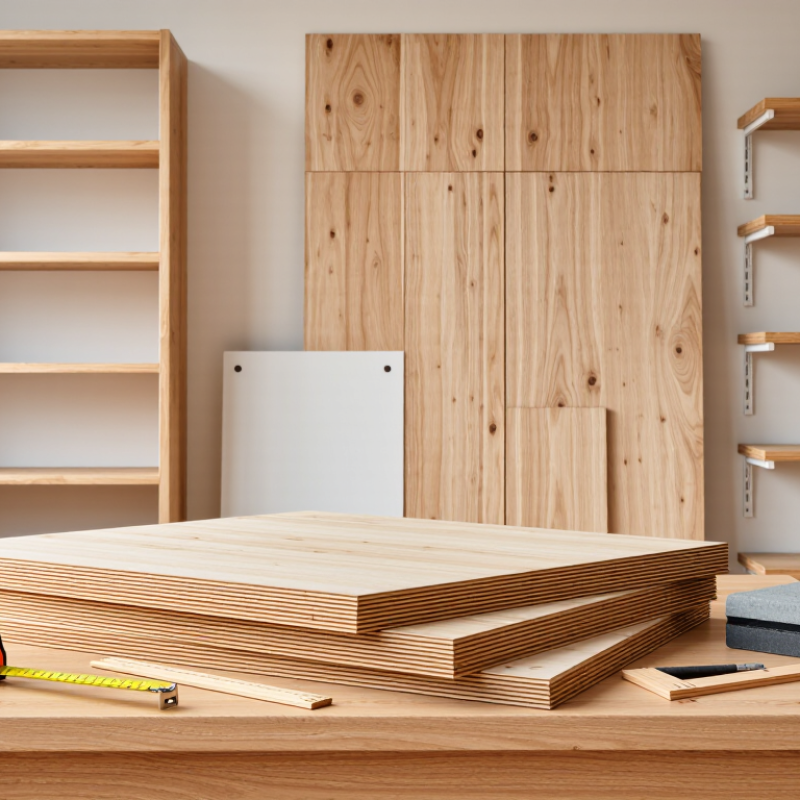
Ordinary plywood is made by bonding thin wood sheets, called veneers, into a flat panel. Manufacturers usually peel veneers from logs, dry them, apply adhesive, and stack them with neighboring grain directions crossing. The layered stack is pressed with heat, then trimmed and sanded. That cross-grain construction helps limit splitting and keeps panels more stable than a single solid board. Small detail, big effect. The exact veneer count, adhesive, and finish vary by product grade and intended use.
Moisture still matters. The USDA Forest Products Laboratory’s Wood Handbook (FPL-GTR-282, 2021) reports an equilibrium moisture content of about 7.7% for wood at 70°F and 40% relative humidity. This is not a plywood performance rating, but it shows why storage conditions matter. A damp panel can change dimensions after installation. One limitation is easy to overlook: “ordinary plywood” does not identify one universal construction standard, so check the panel’s grade and exposure rating before choosing it.
Tips: Store panels flat, dry, and supported. Check edges for gaps or loose veneers, and let panels adjust to the room before cutting.

Why Choose Ordinary Plywood for Your Project?
Common Grades, Sizes, and Surface Types
Ordinary plywood is practical when a project needs stable, workable sheet material. APA’s Engineered Wood Construction Guide identifies 4-by-8-foot panels as a standard format, though suppliers may stock other dimensions. Common face grades run from A, smooth and paint-ready, to D, which allows more visible defects. A-C or C-D panels can suit concealed framing, depending on the specified grade and exposure rating. Grade is not a waterproofing claim. Check the panel stamp and project requirements.
Surface choice changes the finish. Sanded faces give paint or clear coat a more even base; rougher faces are better hidden behind linings. Panels may also have textured or overlaid surfaces for specific uses. The USDA Forest Products Laboratory’s Wood Handbook explains how wood products respond to moisture, so match the panel’s exposure classification to the site—not just its face appearance. A shed wall and a dry cabinet interior need different specifications.
Tips: Check thickness, grade, and exposure stamp before cutting. Keep edges dry during storage. Small details matter. One easy mistake is choosing by price alone; I’d also inspect a sample for voids, flatness, and surface quality. Some variation is normal, and the neatest face may not be the right structural panel.
Ordinary plywood gets its strength from thin wood veneers bonded with alternating grain directions. This cross-layered construction helps a panel resist splitting and stay flatter than many solid boards. It is also widely available, easy to cut with common tools, and often less expensive than specialty panels. A sharp blade helps reduce tear-out along the face.
For a bookcase or utility cabinet, ordinary plywood can work well when the panel thickness and support spacing suit the load. Check the panel’s grade and look for visible gaps, patches, or raised veneer before buying. Small flaws matter. The edges may show veneer layers, and a smooth painted finish can take extra filling and sanding. Ordinary panels can also swell or delaminate after repeated wetting, so they are a poor choice for persistently damp locations unless their rating and protection suit the conditions. I still find moisture protection easy to underestimate: a sealed face does not automatically protect exposed edges. For shelves carrying heavy items, verify the panel’s stated rating or test a sample; “plywood” alone does not tell you its capacity.
Ordinary plywood is useful because one sheet can serve several jobs. In construction, it commonly forms roof and wall sheathing, subfloors, and backing for fixtures. The U.S. Census Bureau recorded about 1.45 million privately owned housing completions in 2023; that figure shows the scale of residential building, though it does not mean every home used plywood.
For floors and roofs, panel span matters. APA’s Engineered Wood Construction Guide lists rated sheathing marks such as 24/16 and 32/16, which indicate approved support spacing for specified applications. Check the panel stamp and project plans rather than choosing by thickness alone.
DIY projects make the material’s versatility tangible: a cut sheet can become a garage shelf, a workbench top, or a simple cabinet side. Not every sheet. Interior-grade panels suit dry spaces, while exposed or damp locations need an appropriate panel rating and edge protection.
A detail easy to miss is the cut edge; it can absorb moisture faster than the face. Measure twice. Leave room for clean cuts, and support long shelves so they do not sag under books or tool boxes.
USDA Forest Products Laboratory guidance in the Wood Handbook explains that wood responds to changing moisture conditions, so storing panels flat and dry before installation is practical, not fussy. Ordinary plywood is forgiving, but its grade, veneer quality, and intended exposure still deserve a second look.
Why Choose Ordinary Plywood for Your Project?
Choosing plywood starts with the job, not the price tag. For a cabinet back, smooth faces and a stable core may matter most. For shelving, thickness and support spacing help prevent a loaded board from sagging. Check the panel’s grade, thickness, and exposure rating before buying. “Interior” panels suit dry spaces; occasional dampness calls for an exterior-rated panel, though no plywood should stay wet.
Look for the span rating printed on structural panels. APA’s Engineered Wood Construction Guide explains ratings such as 32/16: the first number indicates roof support spacing, and the second indicates floor support spacing, in inches. These figures are useful benchmarks, not a promise that every design will perform well. Load, fastening, and installation direction still matter. Measure the supports carefully. A small mismatch can cause a soft or uneven surface.
Tips: Bring your cut list to the lumber yard, then inspect panel edges for gaps and damage. Store sheets flat, off concrete, and protect them from rain. For a painted project, test a small offcut first; ordinary plywood can absorb finish unevenly. That detail is easy to overlook.
Select a panel thickness suited to the job. This chart compares common U.S. nominal plywood thicknesses with their typical actual thicknesses.
Check the product specification before buying: actual thickness may vary slightly by product and manufacturing tolerances.