Top Uses of 430 Stainless Steel Strips for Global Buyers?
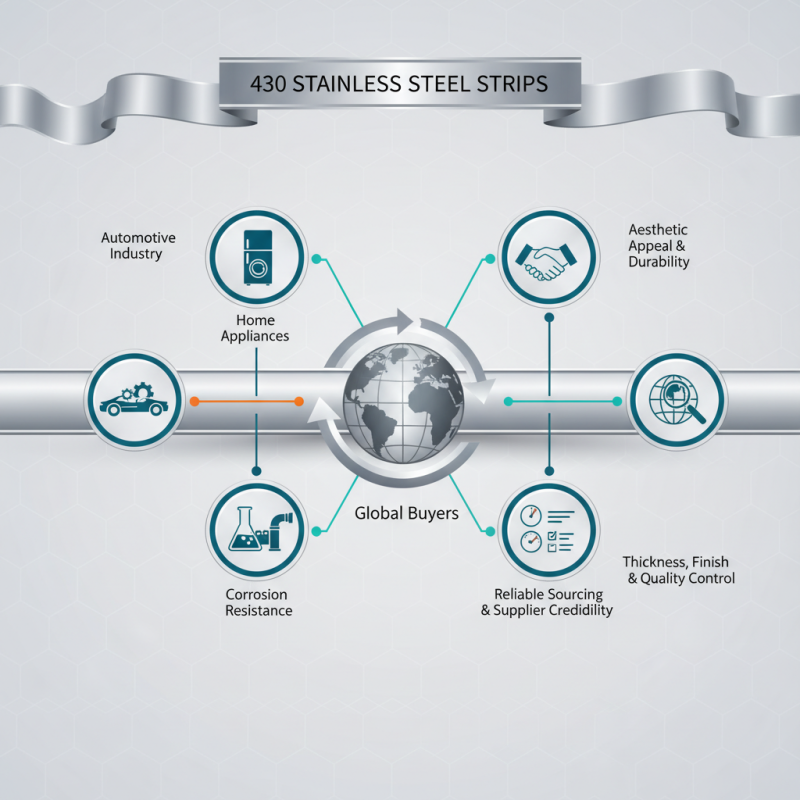
In the realm of industrial applications, 430 Stainless Steel Strips stand out due to their versatility and durability. These strips are commonly used in industries ranging from automotive to home appliances. Their resistance to corrosion and oxidation makes them a reliable choice for various products. Manufacturers who prioritize quality often rely on 430 stainless steel strips.
Global buyers are increasingly aware of the numerous applications of these strips. They not only enhance the aesthetic appeal of products but also ensure longevity and performance. However, it is essential to choose the right supplier who understands the significance of these materials. Reliable sourcing is crucial for maintaining high standards in production.
In the competitive market, selecting 430 stainless steel strips can be a challenge. Buyers must consider factors like thickness, finish, and supplier credibility. Missteps in these choices can lead to reduced product quality and increased costs. Therefore, a thorough understanding of 430 stainless steel strips is vital for making informed decisions.
Top Applications of 430 Stainless Steel Strips in Manufacturing Industries
430 stainless steel strips play a vital role in various manufacturing sectors. Their excellent corrosion resistance and aesthetic appeal make them a preferred choice. In the architectural field, these strips are used for decorative elements. Buildings benefit from their durability and maintenance-free nature. The annual growth rate in this sector is expected to reach 6% by 2025, as per a recent report from the International Stainless Steel Forum (ISSF).
Additionally, 430 stainless steel is crucial in the automotive industry. Manufacturers utilize it for exhaust systems and decorative trims. Its ability to withstand high temperatures without compromising structural integrity is impressive. According to Grand View Research, this segment is projected to grow significantly, accounting for over 15% of the overall stainless steel market by 2027. Despite the benefits, designers sometimes overlook the alloy's limitations in specific high-stress applications.
In the kitchenware industry, 430 stainless steel strips are widely used for cookware and appliances. They provide a cost-effective solution while maintaining aesthetic quality. The global kitchenware market is anticipated to expand by 3.8% annually over the next few years. However, the product's magnetic properties can limit their use in some electronic applications. Balancing cost, performance, and design remains an ongoing challenge for manufacturers.
Market Demand and Growth Trends for 430 Stainless Steel Strips Globally
The global market for 430 stainless steel strips is witnessing notable growth. These strips feature a balanced combination of ferritic stainless steel properties, providing excellent corrosion resistance and formability. Demand stems from various sectors, including automotive, kitchenware, and construction. The versatility of 430 stainless steel makes it appealing to manufacturers worldwide.
Recent trends indicate rising demand across emerging markets. Industries are rapidly adopting stainless steel due to its durability and aesthetic qualities. For example, the kitchen appliance sector is increasingly utilizing 430 strips for their resilience and low maintenance. However, competition is intensifying, and some manufacturers may struggle to maintain quality amid increasing production pressure.
Investments in sustainable practices are becoming essential. While the market has potential, it faces challenges such as fluctuating raw material costs. Buyers must consider sourcing from reliable suppliers to ensure product integrity. The growth trajectory of 430 stainless steel strips demands continuous monitoring of market dynamics and potential technological advancements.
Mechanical Properties of 430 Stainless Steel Strips and Their Industrial Implications
The mechanical properties of 430 stainless steel strips make them popular in various industries. This grade of stainless steel offers excellent corrosion resistance and moderate strength. It is magnetic, which differentiates it from other stainless steel grades. The yield strength typically ranges around 205 MPa, while the tensile strength reaches about 450 MPa. These properties are essential for structural applications.
In the automotive sector, 430 stainless steel strips are commonly used for parts like exhaust systems. Their ability to withstand high temperatures and resist oxidation contributes to their durability. In kitchen appliances, this steel is found in some interiors. Its aesthetic appeal is another reason for its use. However, users must consider its limitation in highly corrosive environments.
In construction, these strips support architectural elements, ensuring stability. Their fabrication is relatively straightforward, yet, challenges can arise during welding. Each application demands an understanding of both advantages and drawbacks. Users should evaluate their needs carefully before selecting 430 stainless steel strips. Balancing performance with practical application can prevent costly mistakes.
Top Uses of 430 Stainless Steel Strips
This chart illustrates the top applications of 430 stainless steel strips, highlighting their significant usage in various industries. The automotive parts sector leads with 25%, followed by food processing and building & construction sectors.
Comparison of 430 Stainless Steel with Other Alloys in Various Applications
When evaluating 430 stainless steel, understanding its performance compared to other alloys is essential. 430 stainless steel is a ferritic alloy known for its excellent corrosion resistance and moderate strength. In applications like kitchenware, automotive trim, and appliances, it performs well. An industry report indicates that it can withstand moderate acidic environments, making it suitable for various domestic applications.
Comparing 430 to austenitic alloys like 304 shows distinct differences. While 304 offers greater corrosion resistance due to its nickel content, it also comes with a higher cost. A 2020 report highlighted that 430 stainless steel was chosen in 63% of cases for cost-sensitive projects, where budget constraints are critical. Users must weigh this against potential limitations, such as lower ductility in 430, which might impact more complex shapes.
In some sectors, the magnetic properties of 430 stainless steel provide advantages that austenitic alloys lack. This feature is beneficial in applications like magnetic separators. However, industries requiring high tensile strength and weldability may need to consider alternatives. These nuances highlight the importance of assessing specific project demands before selection.
Top Uses of 430 Stainless Steel Strips for Global Buyers
| Application | 430 Stainless Steel | Other Alloys (e.g., 304, 316) | Comparison |
| Appliances | Excellent resistance to oxidation, cost-effective | Higher resistance to corrosion, more expensive | Used for parts that require less corrosion resistance |
| Automotive Components | Suitable for exhaust systems and trim | Better durability and strength | Trims where aesthetics are less critical |
| Kitchen Equipment | Commonly used in sinks and cutlery | Preferred for high-end kitchen tools | Cost-effective option for everyday use |
| Surgical Instruments | Limited use due to lower corrosion resistance | Highly used due to corrosion resistance | Not ideal for critical surgical tools |
| Construction | Used for fascias and cladding | Better long-term durability | Affordable choice for decorative elements |
Sustainability and Recycling Potential of 430 Stainless Steel Strips in Industry
The sustainability and recycling potential of 430 stainless steel strips are significant in various industries. This grade of stainless steel is known for its excellent corrosion resistance and durability. It contains around 17% chromium, providing inherent resistance to oxidation. This makes it an ideal material for products exposed to harsh environments.
Recycling is a key factor in the steel industry. 430 stainless steel strips are highly recyclable, maintaining their properties even after multiple cycles. Steel can be recycled indefinitely without losing quality. This is crucial as industries push for greener practices and reduced waste. Using recycled materials can also lower production costs and energy usage.
However, the recycling process is not without challenges. Contaminants can affect the quality of recycled steel. Additionally, the collection and sorting of scrap materials require efficient systems. Industries must focus on improving these processes to harness the full potential of 430 stainless steel. Establishing better recycling techniques can advance sustainability efforts, making it a worthwhile area for reflection and development.