Best DIN 42530 1/250 Transformer Bushing Supplier?

Choosing the best Din 42530 1/250 Transformer Bushing Supplier requires more than comparing catalog prices. Transformer bushings must fit accurately, withstand electrical stress, and remain stable during years of thermal cycling. A dependable supplier should understand transformer assembly, not simply ship a standard component.

Look for documented manufacturing experience with porcelain or resin-insulated bushings. Ask for dimensional drawings, material details, test records, and traceable batch information. The supplier should confirm mounting dimensions, conductor size, terminal design, creepage distance, and compatibility with the transformer’s oil or insulation system. Small differences matter. A few millimeters at the flange can delay installation.

Quality evidence should be practical and verifiable. Factory inspection reports, routine test procedures, and clear replacement policies reveal how seriously a supplier manages risk. Experienced technical staff should answer questions about packing, storage, installation torque, and inspection after transport. Photographs help, but they are not proof.

No supplier is perfect.

A careful buyer should still verify the designation against the original transformer drawing and applicable project requirements. DIN 42530 identification may not cover every performance expectation for a modern installation. This is where professional judgment matters. A trustworthy manufacturer will admit limitations, recommend suitable testing, and avoid promising universal compatibility. They should also provide consistent communication from quotation through delivery. In practice, the best choice is usually the supplier offering reliable documentation, controlled production, responsive engineering support, and repeatable quality—not merely the lowest initial price. The final decision should reflect service history, technical fit, and evidence you can independently review.
Best DIN 42530 1/250 Transformer Bushing Supplier?

DIN 42530 1/250 Transformer Bushing Specifications and Functions

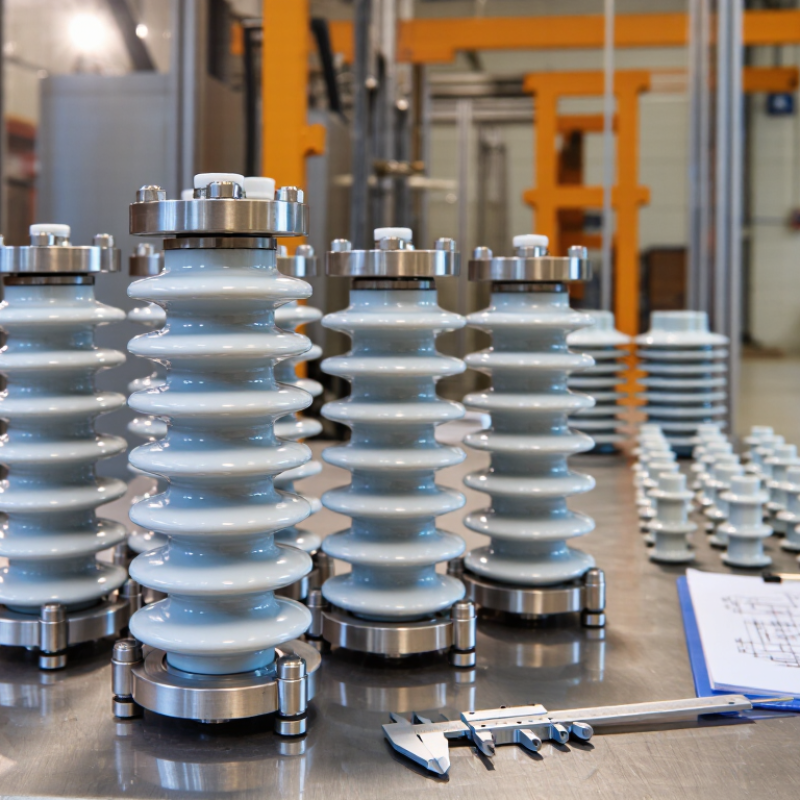
DIN 42530 1/250 transformer bushings are commonly understood as low-voltage porcelain bushings rated for 1 kV and 250 A. They guide a conductor through the transformer tank while maintaining insulation, mechanical support, and oil containment. The porcelain body provides a long creepage path. The metal terminal carries load current with controlled contact pressure.

The 250 A rating is not a target for continuous overheating. Installation temperature, conductor size, connection torque, and enclosure ventilation affect real performance. IEC 60137 provides useful principles for insulated bushings, but the exact DIN drawing remains decisive. Check mounting-hole spacing, flange thickness, terminal dimensions, gasket position, and clearance before ordering. Small mismatches can create oil leaks or loose connections. Field fit is not always perfect.

The IEA’s Electricity Grids and Secure Energy Transitions report estimates annual grid investment must exceed 600 billion dollars by 2030, more than double current levels. This expansion increases demand for dependable transformer components and disciplined inspection. In practice, technicians should examine porcelain cracks, carbon tracking, discoloration, and terminal heating during maintenance. Infrared scans help identify abnormal resistance at the connection.

A simple test.

One point deserves reflection: a bushing can meet its nameplate rating yet fail through poor installation. Supplier evaluation should therefore include material certificates, routine-test records, dimensional drawings, and traceable quality procedures. Availability matters, but verified compatibility matters more.

Key Factors for Selecting a DIN 42530 1/250 Supplier

Best DIN 42530 1/250 Transformer Bushing Supplier?

Selecting a DIN 42530 1/250 supplier requires more than comparing prices. Confirm the 1 kV insulation level, 250 A current rating, mounting dimensions, conductor design, and creepage distance. Ask for certified drawings before ordering. Small dimensional errors can delay installation.

Testing evidence matters. IEC 60137 defines requirements for insulated bushings above 1 kV, including electrical, thermal, and mechanical performance. CIGRE Technical Brochure 642, based on a multinational transformer failure survey, identifies insulation deterioration, moisture ingress, and sealing problems as recurring reliability concerns. Request routine test records, material specifications, oil compatibility data, and traceability for each production batch. A supplier should explain its quality controls clearly.

Production experience is equally important. Review sample inspection reports, dimensional tolerances, delivery history, and technical response times. Check whether the supplier can support replacements years later. Good communication reduces mistakes. A low quotation may exclude testing or export packaging. That is easy to miss. I would also request one pre-production sample for visual and dimensional approval. It adds time, but it may prevent a costly field correction. No supplier is perfect, so transparent corrective-action records are more valuable than polished sales claims.

Materials, Manufacturing, and Quality Control Standards

A dependable DIN 42530 1/250 transformer bushing supplier starts with controlled materials. High-quality electrical porcelain should have uniform density, low porosity, and a stable glazed surface. These properties help resist moisture, thermal stress, and surface tracking. The conductor material must also match the transformer design and connection requirements. Copper and aluminum need proper mechanical strength and corrosion protection.

Manufacturing control matters just as much. Each porcelain body should receive careful dimensional inspection before and after firing. Small changes in wall thickness can affect mechanical performance. Metal parts require accurate machining, clean threads, and secure joining methods. Experienced factories monitor kiln temperature, firing time, and cooling conditions. They should record these results for every production batch.

Quality control should include incoming material checks, process inspections, and final testing. Common checks include visual examination, dimensional measurement, insulation resistance, dielectric testing, and leakage inspection. Test limits must follow the applicable standard and the customer’s technical specification. Traceability is essential, from raw porcelain to final packaging. A supplier should provide clear inspection reports, not vague promises. Packaging also deserves attention; damaged glaze may remain unnoticed until installation. I have seen specifications that looked complete but missed storage conditions. That gap deserves review. No checklist replaces a physical sample inspection, especially when long-term reliability is critical.

How to Evaluate Supplier Certifications, Testing, and Reliability

Best DIN 42530 1/250 Transformer Bushing Supplier?

How to Evaluate Supplier Certifications, Testing, and Reliability

When evaluating a DIN 42530 1/250 transformer bushing supplier, start with certification evidence. Request current certificates, test standards, issuing laboratories, and product scope. Confirm that each document matches the exact bushing design, not merely a similar product family. A certificate without traceable batch records deserves careful questioning. Paperwork matters.

Review routine and type-test procedures in detail. Ask for insulation resistance, dielectric withstand, leakage, dimensional, and thermal cycling results. Testing should reflect the voltage class and actual service environment. Inspect sample reports for dates, equipment numbers, acceptance limits, and authorized signatures. Small details matter. A polished report can still omit failure criteria, which weakens its value.

Reliability also depends on manufacturing discipline. Check material traceability from porcelain or composite bodies to seals, terminals, and mounting hardware. Request audit records, nonconformance procedures, calibration certificates, and field-failure statistics. Speak with technical staff, not only sales representatives. Their answers reveal practical knowledge quickly. Supplier references should include comparable transformer ratings and operating conditions.

A useful evaluation includes a witnessed factory test and an independent inspection. Do not rely on verbal promises about lead time or replacement support. Confirm packaging methods, storage limits, warranty terms, and response procedures in writing. No checklist is perfect. I would still leave room for review after the first delivery, because installation feedback can expose weaknesses that laboratory testing misses.

Ordering, Installation, and Maintenance Considerations

Best DIN 42530 1/250 Transformer Bushing Supplier?

Ordering, Installation, and Maintenance Considerations

Selecting a DIN 42530 1/250 transformer bushing requires more than comparing prices. Confirm the exact drawing, interface dimensions, insulation level, conductor arrangement, and service environment. Ask the supplier for dimensional drawings, routine test records, material information, and traceable inspection documents. Check the current standard edition and project specifications. A small mismatch can delay installation.

Field experience shows that packaging also matters. Inspect the ceramic or polymer body, flange, terminals, and sealing surfaces immediately after delivery. Look for cracks, impact marks, moisture, or damaged threads. Installation should be performed by qualified electrical personnel with the transformer isolated, tested, and properly earthed. Clean contact surfaces with an approved lint-free method. Align the bushing without forcing it. Use the specified gasket and tightening sequence. Incorrect torque may cause leaks or mechanical stress. I have seen careful teams overlook washer placement.

Maintenance starts with a recorded baseline. Document torque checks, insulation resistance, visual condition, and thermographic readings when appropriate. Inspect after severe weather, short-circuit events, or transformer relocation. Remove dust and salt deposits using procedures compatible with the insulating material. Do not improvise solvents. Check for oil seepage, discoloration, loose connections, and unusual heating. Maintenance intervals should follow the equipment manual, operating conditions, and site risk assessment. Records should include dates, readings, weather, and corrective actions. Even a clean bushing can hide developing internal problems. Testing alone is not enough.

Best DIN 42530 1/250 Transformer Bushing Supplier? - Ordering, Installation, and Maintenance Considerations

Data Dimension Typical Requirement / Value Ordering Consideration Installation and Maintenance Guidance
Applicable standard DIN 42530, subject to the exact edition and applicable national requirements Request the supplier’s dimensional drawing and conformity documentation for the specified DIN 42530 configuration. Confirm that the supplied bushing matches the transformer tank, cover thickness, terminal arrangement, and insulation system before installation.
Voltage class 1 kV nominal voltage class Specify the system’s highest operating voltage, insulation coordination, and required test levels rather than relying only on the nominal label. Maintain the designed clearances and creepage distances. Do not operate above the approved voltage class.
Rated current 250 A continuous current rating, commonly identified as 1/250 Check continuous load current, overload profile, conductor size, connection hardware, and permissible temperature rise. Tighten connections to the specified torque and inspect for discoloration, hot spots, oxidation, or looseness during service inspections.
Bushing construction Porcelain insulator with a conductive current path and sealing components Confirm porcelain profile, conductor material, terminal type, gasket material, and compatibility with the transformer fluid. Handle porcelain carefully. Do not use a bushing with chips, cracks, damaged glaze, bent terminals, or degraded sealing surfaces.
Mounting arrangement Tank or cover-mounted arrangement; exact hole pattern and dimensions must be confirmed from the approved drawing Provide cover thickness, mounting-hole diameter, bolt-circle or hole spacing, internal projection, external projection, and terminal orientation. Clean the mounting face, install the gasket evenly, and tighten fasteners in a crosswise sequence to prevent flange distortion.
Environmental conditions Outdoor or indoor use according to the selected creepage, sealing, and enclosure requirements State altitude, ambient temperature, pollution level, solar exposure, humidity, salt contamination, and installation orientation. Keep the porcelain surface clean and dry. Increase inspection frequency in coastal, dusty, chemically aggressive, or high-condensation locations.
Transformer fluid compatibility Compatibility with the specified insulating liquid and sealing materials Identify the fluid type, operating temperature range, gasket compound, and any restrictions on oils or ester fluids. Prevent contamination during installation and check for oil seepage around the flange, gasket, and terminal area.
Electrical clearances Clearances must be based on the approved design, system voltage, and insulation coordination Request internal and external clearance data and verify compatibility with busbars, leads, tank walls, and nearby grounded parts. Do not route conductors close to grounded metal or sharp edges. Maintain the manufacturer’s minimum bending radius for connected cables.
Terminal connection Connection hardware suitable for a 250 A continuous circuit Confirm terminal dimensions, stud or palm configuration, conductor material, plating, and included nuts, washers, and locking devices. Use compatible contact materials or approved joint compound where required. Apply the specified torque with a calibrated tool.
Factory documentation Dimensional drawing, rating information, inspection record, and installation instructions Require traceable documentation, packing identification, quantity, revision level, and certificates requested by the project specification. Keep documents with the transformer maintenance records and verify the part number against the approved bill of materials.
Pre-installation inspection Visual and dimensional inspection before fitting Define the acceptance procedure for cracks, glaze defects, dimensions, terminal condition, gasket quality, and packaging damage. Inspect under good lighting, remove dust with a clean lint-free cloth, and reject any component with structural porcelain damage.
Recommended commissioning checks Connection integrity, insulation condition, leakage check, and functional verification Agree on test scope with the transformer manufacturer and the responsible electrical engineer; test limits depend on the complete assembly. Verify torque, grounding, oil level, absence of leaks, phase identification, and safe electrical clearances before energization.
Routine maintenance Periodic visual, thermal, mechanical, and cleanliness inspections Ask for recommended inspection intervals and spare-gasket or replacement-part availability. Inspect at least during scheduled transformer maintenance and use infrared thermography on energized equipment where permitted.
Replacement criteria Replace when structural, sealing, insulation, or thermal performance is no longer acceptable Confirm interchangeability; a visually similar bushing may not have the same dimensions, creepage, current rating, or insulation level. Replace after porcelain cracking, persistent leakage, severe tracking, terminal overheating, or irreversible corrosion. De-energize and isolate before work.
Supplier evaluation Technical conformity, documentation quality, dimensional accuracy, lead time, and after-sales support Compare approved drawings, delivery schedule, packaging method, warranty terms, inspection records, and response time for technical queries. Select the supplier that can provide traceability and stable replacement availability, not only the lowest purchase price.
Technical note: The 1/250 designation is commonly used to indicate a 1 kV voltage class and 250 A rated current. Exact mounting dimensions, insulation levels, creepage distance, temperature-rise limits, and test requirements must be confirmed against the applicable DIN 42530 edition and the approved transformer design.