10 Best Geotextiles for Effective Soil Stabilization and Erosion Control?
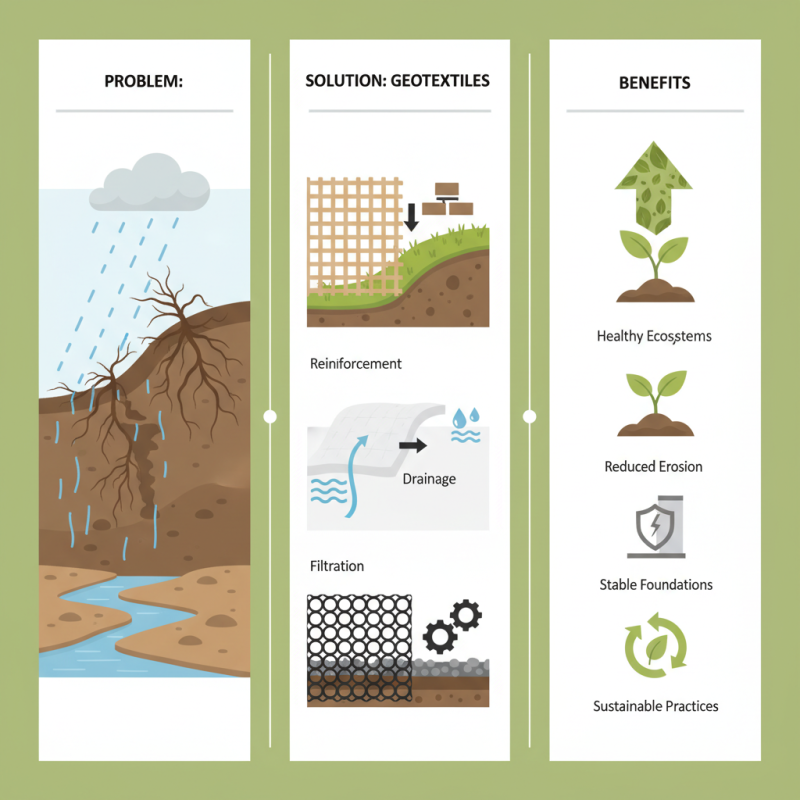
Soil erosion is a significant issue affecting landscapes and ecosystems. Geotextiles emerge as a practical solution to this problem. They help stabilize soil and control erosion effectively. With various types available, selecting the right geotextile can enhance project results.
These materials are woven, non-woven, or permeable. Each type has unique properties. Some provide excellent drainage, while others offer reinforcement. Homeowners and contractors face challenges in choosing the best option. Understanding these variations is essential for success.
Incorporating geotextiles into landscaping and construction projects can yield impressive results. However, improper use can lead to failures. Project managers must evaluate specific needs carefully. The right geotextiles can protect soil, reduce erosion, and promote sustainable practices.
Understanding Geotextiles: Definition and Types
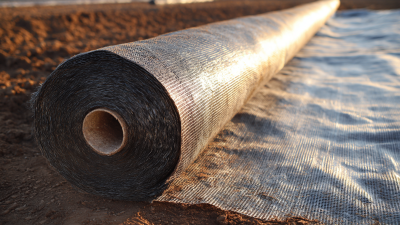
Geotextiles are vital materials in civil engineering and environmental management. They are permeable fabrics used to improve soil stability and prevent erosion. According to a recent report by the International Geosynthetics Society, the global geotextiles market was valued at approximately $5.7 billion in 2022. This figure is expected to grow steadily as awareness of sustainable practices increases.
There are two main types of geotextiles: woven and non-woven. Woven geotextiles provide high strength and excellent tension resistance, ideal for applications like road construction. Non-woven geotextiles are manufactured through a different process, yielding a fabric that offers filtration while facilitating drainage. In many cases, choosing the appropriate type can be challenging. Each application has unique requirements that can complicate this decision.
The effectiveness of these materials hinges on correct installation. Many projects have faced delays due to improper handling of geotextiles. Over time, factors like UV exposure and soil type impact their longevity. The need for ongoing research and education in this field is evident. Despite the advanced state of technology, issues still arise. Failure to consider environmental factors can lead to costly consequences.
Top 10 Geotextiles for Soil Stabilization and Erosion Control
Importance of Soil Stabilization and Erosion Control
Soil stabilization and erosion control are vital for maintaining land integrity. They prevent landslides and soil degradation. Healthy soil supports plants, acts as a water filter, and reduces sediment runoff. Effective control methods ensure long-term sustainability.
Tips for success in soil stabilization include selecting the right geotextile. The material's properties significantly affect performance. Look for strength and durability. It’s important to consider local climate and soil types. Testing materials in small areas can provide insight into what works best.
Another consideration is maintenance. Even the best solutions require some upkeep. Periodically check for signs of erosion or soil movement. Adjustments may be necessary over time. Investing in regular inspections can save future repair costs. Remember, no method is perfect. Continuous learning and adjustments are crucial for effective soil management.
10 Best Geotextiles for Effective Soil Stabilization and Erosion Control
| Geotextile Type |
Material |
Weight (g/m²) |
Application |
Benefits |
| Non-Woven Geotextile |
Polypropylene |
150 |
Erosion Control |
High filtration and drainage |
| Woven Geotextile |
Polyester |
200 |
Soil Stabilization |
Strength and durability |
| Geocell |
HDPE |
800 |
Slope Protection |
Prevents soil erosion |
| Geotextile Fabric |
Polypropylene |
100 |
Filtration |
Good drainage performance |
| Geotextile Tubes |
Polyester |
500 |
Dewatering |
Effective sediment containment |
| Composite Geotextile |
Non-woven & Woven |
250 |
Versatile |
Enhanced performance |
| Needle Punched Geotextile |
Polypropylene |
120 |
Separation |
High tensile strength |
| Filtration Geotextile |
Polyester |
180 |
Water Management |
Excellent filtration efficiency |
| Biodegradable Geotextile |
Natural Fibers |
120 |
Eco-Friendly |
Sustainable option for erosion |
Top 10 Geotextiles for Soil Stabilization
Geotextiles play a crucial role in soil stabilization and erosion control. They are versatile fabrics used to improve soil structure and prevent movement from water or wind.
In construction, these materials provide separation, filtration, and reinforcement. They help manage water flow, reducing the risk of erosion. Each type of geotextile has unique properties that suit various projects.
When choosing a geotextile, consider its permeability and strength. Some fabrics are better for drainage while others excel in soil reinforcement. A woven geotextile might be suitable for heavy loads, while a non-woven option could be ideal for filtration. However, not all geotextiles perform equally in every situation. Improper selection can lead to project failures or increased maintenance costs.
In some cases, geotextiles may degrade over time. This could lead to soil issues down the road. It's important to regularly evaluate their condition. Understanding local soil types and environmental conditions can enhance performance. Ultimately, a thoughtful approach to selecting and maintaining geotextiles is essential for effective erosion control.
Factors to Consider When Choosing Geotextiles
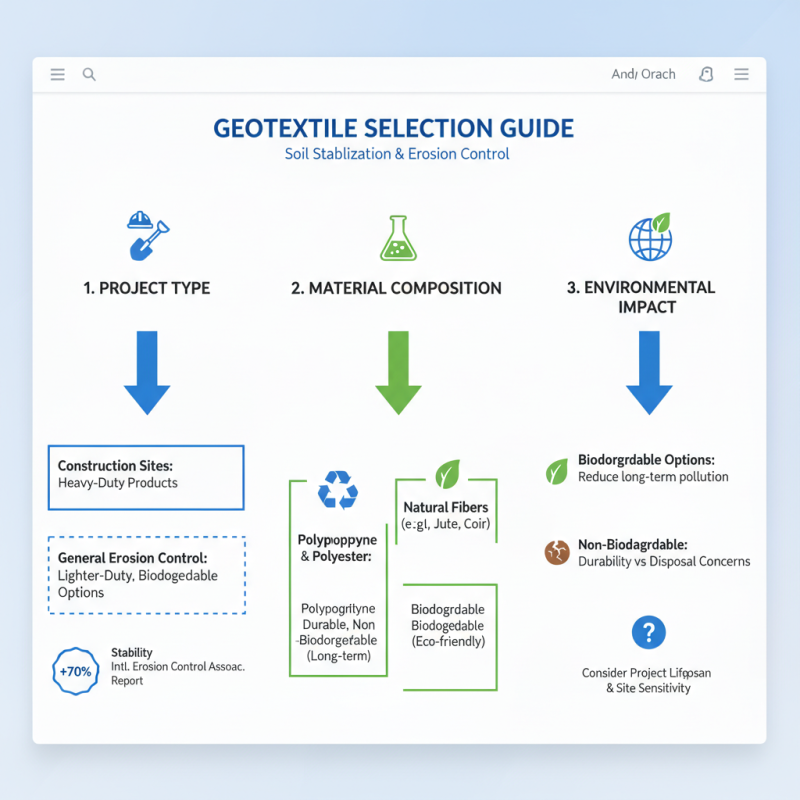
When selecting geotextiles for soil stabilization and erosion control, several factors need careful consideration. The type of project largely influences the choice. For instance, construction sites require heavy-duty products. A report by the International Erosion Control Association indicates that the right geotextile can improve stability by up to 70%. Material composition is another critical factor. Polypropylene and polyester are popular choices due to their durability. However, they may not be biodegradable, raising concerns about environmental impact.
Climatic conditions also play a role. In areas with heavy rainfall, water permeability is vital. Some geotextiles allow water to pass, which can prevent flooding. According to industry studies, products with higher water flow rates can reduce soil erosion by approximately 40%. On the other hand, selecting the wrong type can lead to serious issues. For example, using a non-permeable material in a high-water area might cause water buildup, leading to failure.
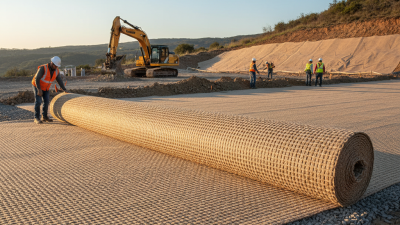
Moreover, installation techniques affect performance. Proper embedding and anchoring can enhance effectiveness. Yet, improper installation can nullify benefits. Research shows that nearly 30% of geotextile failures stem from poor installation practices. Neglecting these factors can lead to unnecessary costs and project delays.
Application Methods for Effective Soil Stabilization and Erosion Control
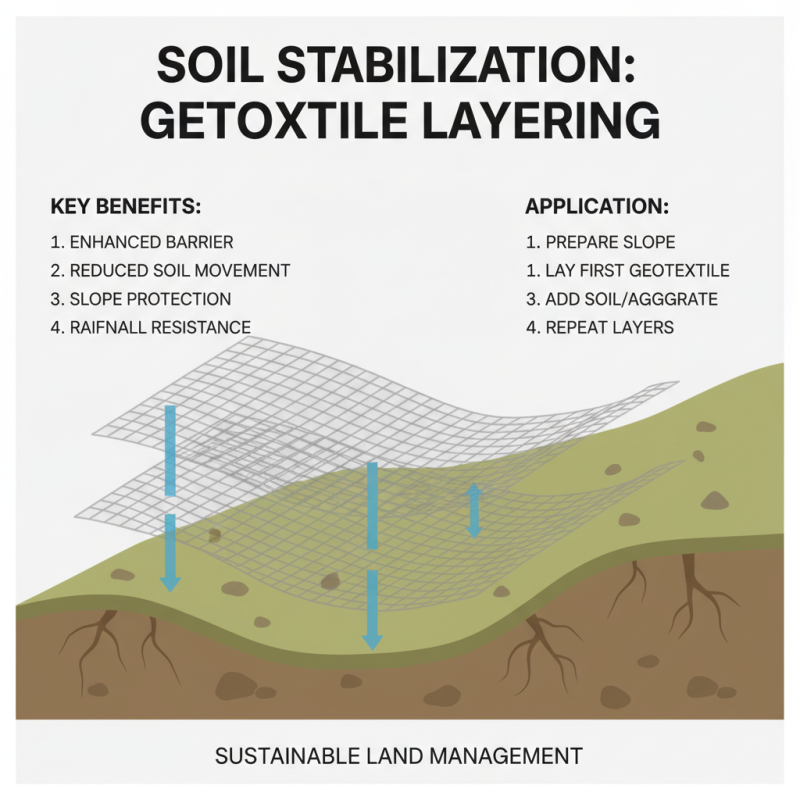
Soil stabilization and erosion control are crucial for sustainable land management. When using geotextiles, various application methods can enhance effectiveness. One common technique is layering. By stacking multiple layers of geotextiles, you create a robust barrier against soil movement. This can be particularly useful on slopes or areas prone to heavy rainfall.
Another method involves using geotextiles in conjunction with vegetation. Plant roots can integrate with the geotextile, creating a natural stabilization effect. This method not only controls erosion but also improves soil health. It may take time for plants to establish, so patience is essential.
Tips: Ensure the soil is properly prepared before installation. Poorly compacted soil can lead to failure. Regular maintenance is also important. Inspect your setup periodically for any signs of deterioration. Remember, sometimes the simplest solutions are the most effective.