Buying a plastic culvert pipe is not simply a matter of choosing the lowest quoted price. Global buyers must match pipe stiffness, diameter, wall profile, soil conditions, traffic loads, and expected water flow. A bright product sample cannot reveal every field risk.
The Federal Highway Administration’s Hydraulic Design of Highway Culverts, HDS-5, evaluates inlet control, outlet control, headwater depth, and barrel capacity. These factors should guide specifications before suppliers are compared. The Plastics Pipe Institute’s Handbook of Polyethylene Pipe also explains how soil support, installation quality, and temperature affect buried pipe performance. Those details matter beneath a gravel road, where poor bedding can create uneven loading within months.
Dr. M. G. Spangler, a leading soil-pipe interaction researcher, is often credited with the principle, “The pipe and the soil are a system.” That sentence remains highly practical. A strong plastic culvert pipe can still fail when trench width, backfill density, or compaction is poorly controlled.
The seven buying tips in this guide focus on evidence, not attractive brochures. They examine material grade, ring stiffness, hydraulic capacity, certification, supplier experience, delivery control, and total installed cost. Some projects may need steel or concrete instead. That is worth admitting.
Request test reports, installation instructions, and project references. Check whether claimed performance matches local standards and site conditions. Global procurement also requires careful review of UV exposure, temperature range, freight protection, and replacement access. Small omissions become expensive underground.
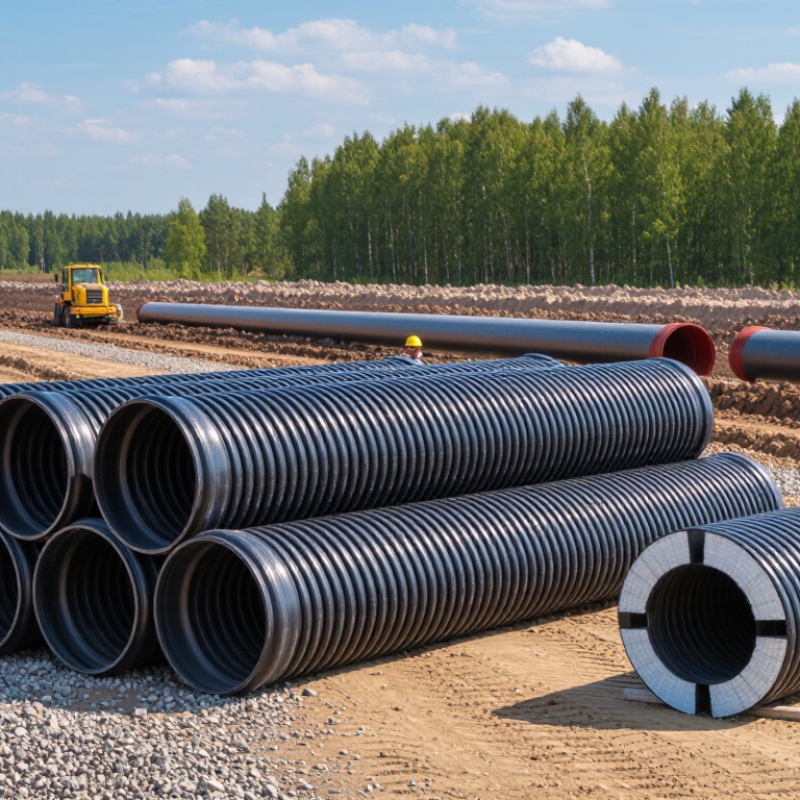
Before buying plastic culvert pipe, define the project in measurable terms. Record the required flow rate, pipe diameter, cover depth, traffic load, and installation length. A farm access road may need a different stiffness class than a highway crossing. Do not choose by diameter alone. Wall profile and ring stiffness affect performance under soil pressure. Keep the design drawings nearby.
Site conditions often decide whether a pipe performs well. Check soil type, groundwater level, drainage chemistry, and seasonal temperature changes. Clay may hold water around the pipe. Poorly compacted backfill can create uneven loading and local deformation. In sunny storage yards, ultraviolet exposure may also weaken some materials before installation. Small details matter. Ask for test reports, installation guidance, and compliance documents that match the destination market. Standards differ between countries, so vague claims are not enough.
Expected service life should be stated in years, not described as “long-lasting.” Compare the pipe’s design life with the road, drainage channel, or agricultural project. Review resistance to corrosion, abrasion, temperature, and repeated loading. Check joint quality carefully; a strong pipe can still fail at a poor connection. In project reviews, I have seen buyers focus on purchase price and overlook bedding costs. That decision later increased labor and repair risks. A realistic budget includes transport, trench preparation, backfill, inspection, and future access. Leave room for uncertainty. Soil reports are sometimes incomplete. Recheck assumptions before placing a large order.
| No. | Buying Tip | Key Project Dimension | Relevant Data or Benchmark | Why It Matters | Buyer Checklist |
|---|---|---|---|---|---|
| 1 | Match the pipe diameter to the required flow | Design flow, catchment area, rainfall intensity, inlet and outlet levels | Hydraulic sizing should consider peak runoff, pipe slope, roughness, allowable headwater, and inlet control. Plastic pipes generally have a smooth interior, which supports efficient flow. | An undersized culvert can cause upstream flooding and erosion, while an oversized pipe may increase excavation, bedding, and transport costs. | Request hydraulic calculations or design assumptions. Confirm nominal diameter, internal diameter, slope, flow capacity, and allowable water level. |
| 2 | Select the correct pipe stiffness and load class | Burial depth, traffic loading, soil density, trench width, and installation quality | Flexible pipes depend on soil-pipe interaction. Common stiffness classifications include ring stiffness values such as SN2, SN4, and SN8, but the required class must be confirmed by structural design. | Pipe stiffness alone does not determine performance; suitable bedding, haunching, side support, and compaction are also essential. | Provide the maximum cover depth and vehicle loading. Verify ring stiffness, deflection limits, installation requirements, and applicable test standard. |
| 3 | Evaluate soil and groundwater conditions | Soil classification, groundwater level, trench stability, pH, and chemical exposure | Polyethylene and polypropylene are commonly selected for corrosion resistance, but joint materials, gaskets, surrounding soil, and transported water should still be checked for compatibility. | Weak, saturated, or highly variable soils can lead to settlement, joint movement, or excessive pipe deformation. | Obtain a geotechnical report where needed. Specify groundwater control, foundation improvement, embedment material, and allowable settlement. |
| 4 | Choose a material suited to temperature and exposure | Operating temperature, ultraviolet exposure, fire requirements, abrasion, and chemical contact | Many thermoplastic culvert applications operate within normal ambient temperature ranges. Material properties can change with temperature, and exposed sections require appropriate UV stabilization or protection. | Temperature, sunlight, abrasive sediments, and unusual chemicals may reduce long-term performance if not considered during specification. | State the minimum and maximum service temperature, exposure conditions, sediment load, chemical constituents, and any local fire regulations. |
| 5 | Specify joint performance and watertightness | Joint type, angular deflection, groundwater pressure, infiltration limits, and installation tolerances | Gasketed bell-and-spigot joints are commonly used for gravity drainage. Joint testing should follow the project specification and the applicable regional standard. | Poorly aligned or contaminated joints can allow infiltration, exfiltration, soil migration, and loss of system capacity. | Confirm gasket material, joint pressure rating where applicable, allowable angular deflection, cleanliness requirements, and field leakage testing. |
| 6 | Plan logistics, dimensions, and installation access | Pipe length, outside diameter, loading limits, container space, lifting method, and site access | Lightweight plastic pipe can reduce handling equipment requirements, but large-diameter sections may need controlled lifting and adequate storage support to prevent distortion. | Transport damage, unsuitable stacking, or difficult access can increase landed cost and delay installation. | Confirm total quantity, piece length, loading plan, maximum package dimensions, unloading equipment, storage duration, and protection from sharp objects. |
| 7 | Set a realistic service-life and maintenance target | Design life, inspection frequency, exposure conditions, cleaning access, and replacement consequences | A service life of approximately 50 to 100 years may be achievable for properly selected and installed thermoplastic drainage products, but the actual life depends on material, loads, temperature, abrasion, UV exposure, and workmanship. | A long design life requires more than a material claim; installation quality, inspection, debris control, and site-specific degradation must be addressed. | Document the target design life, warranty terms, inspection plan, cleaning method, allowable deformation, replacement strategy, and supporting test data. |
Note: Final pipe selection should be verified by the project engineer using local drainage, structural, environmental, transportation, and installation requirements.